The Anglican Church in Walikale: A Year of Growth and Hope
The Anglican Church in Walikale: A Year of Growth and Hope
Last year we shared the story of the remarkable evangelism campaign in Walikale, Democratic Republic of Congo, which sparked new growth in the Anglican Church (read here). One year on, the seeds planted during those early gatherings have borne fruit in ways that show the power of the Gospel to transform both hearts and communities.
In September 2025, church leaders returned to Walikale to encourage the faithful, strengthen local servants, and oversee the construction of two new projects: a Guest House and a Secondary School in Nyalusukula. What they found was a church not only surviving in the face of conflict and instability, but thriving as a source of education, reconciliation, and hope.
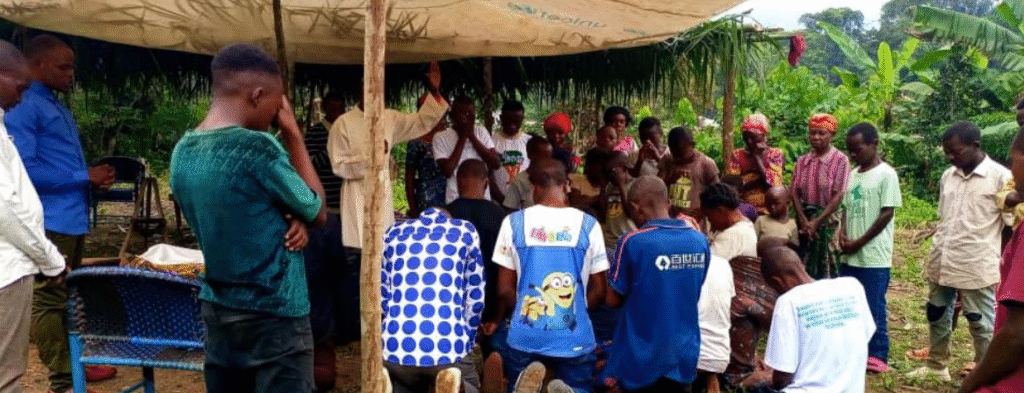
Group at Mubi sub-parish in Walikale
The past year has not been easy. Walikale has witnessed renewed fighting, part of the wider insecurity that continues to grip eastern Congo. Families have been displaced, villages threatened, and communities live daily with uncertainty. Yet, in the middle of this turmoil, the church has stood firm. As one local chief put it, “This is a church that meets the needs of the people, as Jesus Christ did.”
The Anglican Church is now established in almost every corner of Walikale territory. From the Goma-Walikale road to the remote villages along the Bukavu and Kisangani routes, new congregations have been planted and land secured for future ministry. At present, there are 17 plots of land for churches, nine of which are officially registered with the Congolese land registry.
Education has become a vital part of this mission. Four schools are now in place, including two primary and two secondary institutions, with one receiving government support. For many families who had no access to education after years of disruption, the church has stepped into the gap. As the chief of Nyalusukula said, “After suffering for a long time without school, our children had nowhere to go. Today, the Church has brought us both the Word of God and education for our development.”
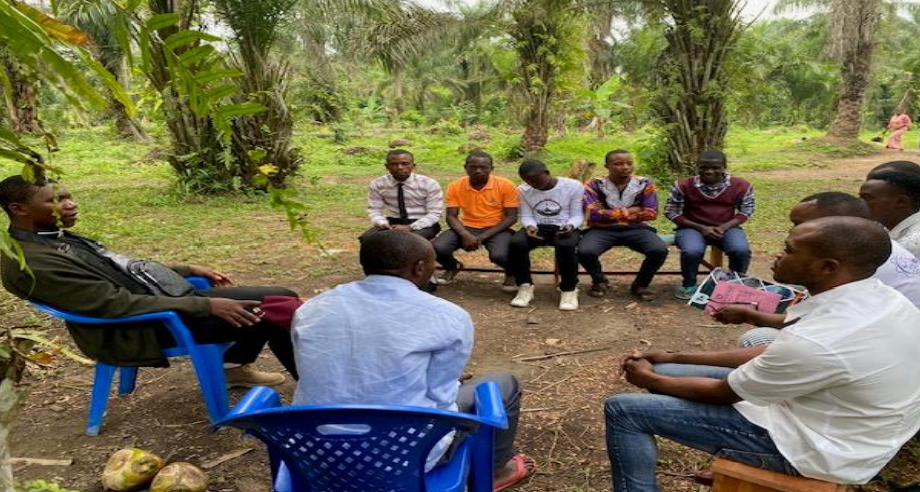
Rev Innocent Kwitonda with evangelists and catechists
The growth in Walikale is not only seen in buildings but in changed lives. One young teacher in Mubi shared how he resisted the Gospel for years, but through the witness of a local evangelist, he gave his life to Christ—even at the cost of losing his job and facing opposition from his family. Another woman testified to the healing she experienced during last year’s evangelism campaign; today she rejoices as the mother of healthy twin daughters, a living testimony to God’s grace.
Village leaders, too, are recognising the church as a force for unity. In Kailenge, a predominantly Muslim district, the Anglican Church has become a bridge for peaceful coexistence and youth mobilisation. Yet, the chief also voiced pressing needs: access to healthcare and safe drinking water. These remain areas where the church seeks support and partnership.
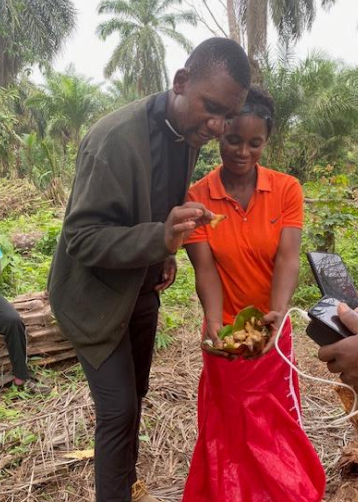
Rev Innocent with a lady from Saint Jacques Parish looking for vitamin-rich insects
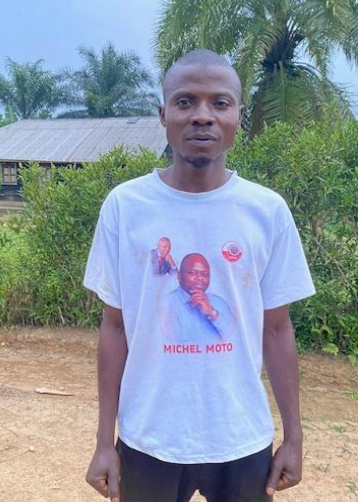
Nyalusukula district chief
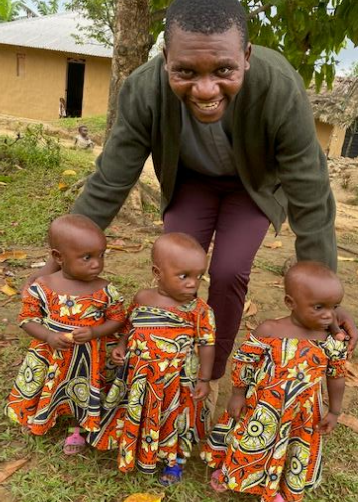
Rev Innocent with the lady's triplets
Rev. Innocent Kwitonda, missionary to Walikale, writes that “many villages are calling for the Church to come and plant new congregations, just like in the book of Acts.” The harvest is indeed plentiful, but the workers are few. Alongside evangelism, there are urgent calls for infrastructure: hospitals, clean water, musical instruments, and resources for students and catechists who are training for ministry.
As we look back on this year of growth, we give thanks for the resilience of the Anglican Church in Walikale and the many faithful leaders who serve under difficult conditions. Please join us in prayer:
For peace in Walikale and across eastern Congo, and for protection of vulnerable communities
For the continuation and expansion of the church across Walikale
For provision of healthcare and clean water in underserved areas
For mothers, children, and young people affected by war and poverty
For the training of pastors, catechists, and students preparing for ministry
The story of Walikale is a reminder that even in fragile places, the Gospel is bearing fruit. The Anglican Church stands as a sign of hope, meeting both spiritual and practical needs, and pointing to the Kingdom of God that is already breaking into the present.