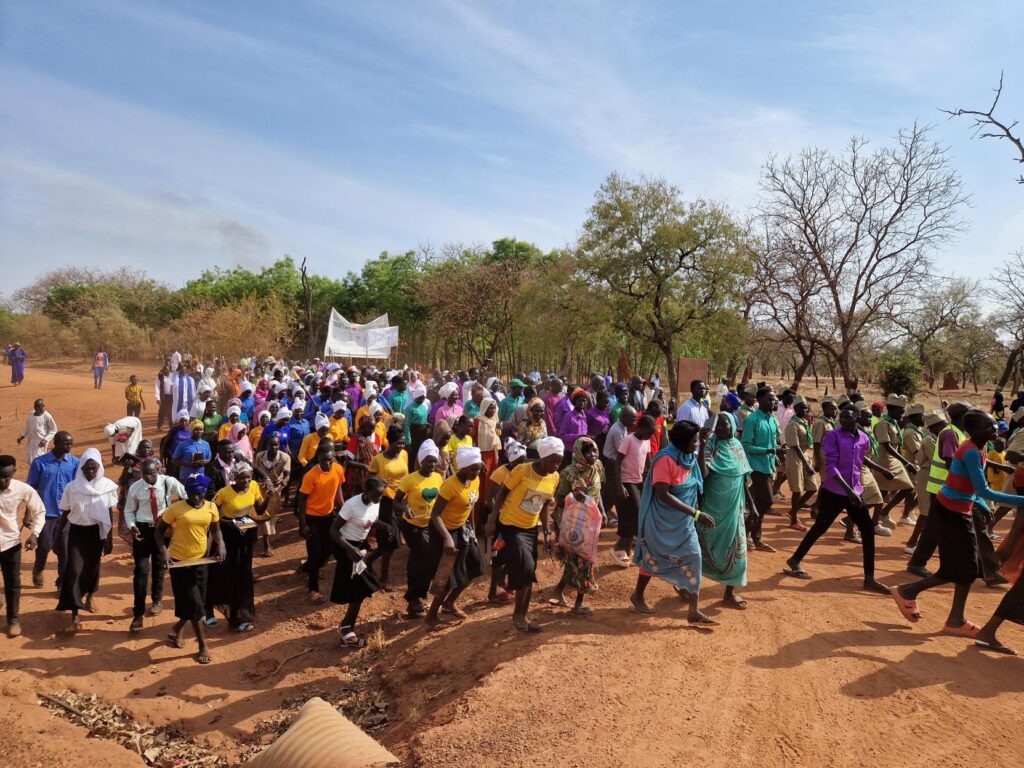
In the Nuba Mountains of Sudan, the Church often gathers beneath mango trees. This is not by choice. Years of conflict have damaged buildings and made large gatherings risky. Drone threats mean that worship sometimes has to take place away from visible structures. However on a recent Sunday, around two hundred believers met together in the shade of the trees to sing, pray, and hear the Word of God.
This quiet act of worship captures something important about the Church in the Nuba Mountains today. There is resilience, faith, and a determination to continue sharing the Gospel even in the midst of hardship.
Earlier this year, John Inglis-Jones, our Regional Relationship Manager for Sudan, and representatives connected to the Relay Trust visited the region as part of a wider journey to meet with leaders of the Episcopal Church of Sudan. The visit provided an opportunity to listen to local church leaders, understand the current situation in the region, and explore how the Trust might continue to support the Church’s work.
The Nuba Mountains have long been affected by conflict, and the recent civil war in Sudan has intensified the challenges facing local communities. Millions across the country have been displaced, and many have fled into the mountains for safety. During the visit, the team met families living in an internally displaced persons camp of around 25,000 people, most of whom had fled the nearby town of Kadugli.
Despite these difficult conditions, the Church continues to serve communities across a vast region. The Episcopal Church of Sudan in the Nuba Mountains oversees dozens of congregations spread across an area roughly twice the size of Wales. Priests and lay leaders travel across remote and sometimes insecure areas to care for their churches and share the Gospel.
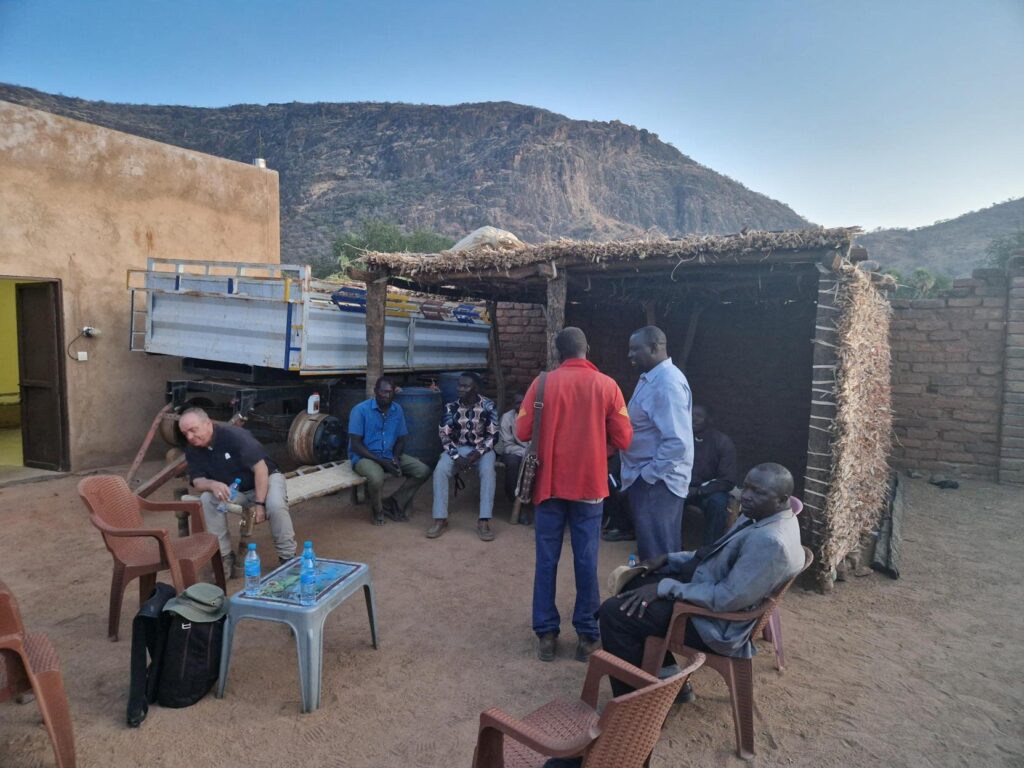
Relay Trust’s work alongside the Church focuses primarily on strengthening leadership. The Trust seeks to support churches by helping train the leaders who will guide congregations in their spiritual life, discipleship, and community service. Rather than directing programmes from outside, the approach is to walk alongside local church leaders and support the training that they believe is most needed.
A key part of this work is theological education. During the visit, the team spent time at Korkel Theological Institute, the only Anglican theological college serving the Nuba Mountains. The institute trains future church leaders who will return to their communities to shepherd congregations across the region.
The buildings are simple and resources are limited, but the commitment of the students is remarkable. Many have come from communities affected by war, However they are preparing to serve churches that depend on them for teaching, pastoral care, and leadership.
Education is also an important part of the Church’s ministry in the region. Grace Secondary School, run by the Diocese of Kadugli, now serves more than 550 pupils from across the Nuba Mountains. The school provides both academic education and Christian formation, helping young people develop the skills and character needed to rebuild their communities in the future.
For those reading from elsewhere in the world, there are
several ways to stand alongside the Church in the Nuba Mountains.